

Nicholas Morieson
Download PDF
May 11 2026
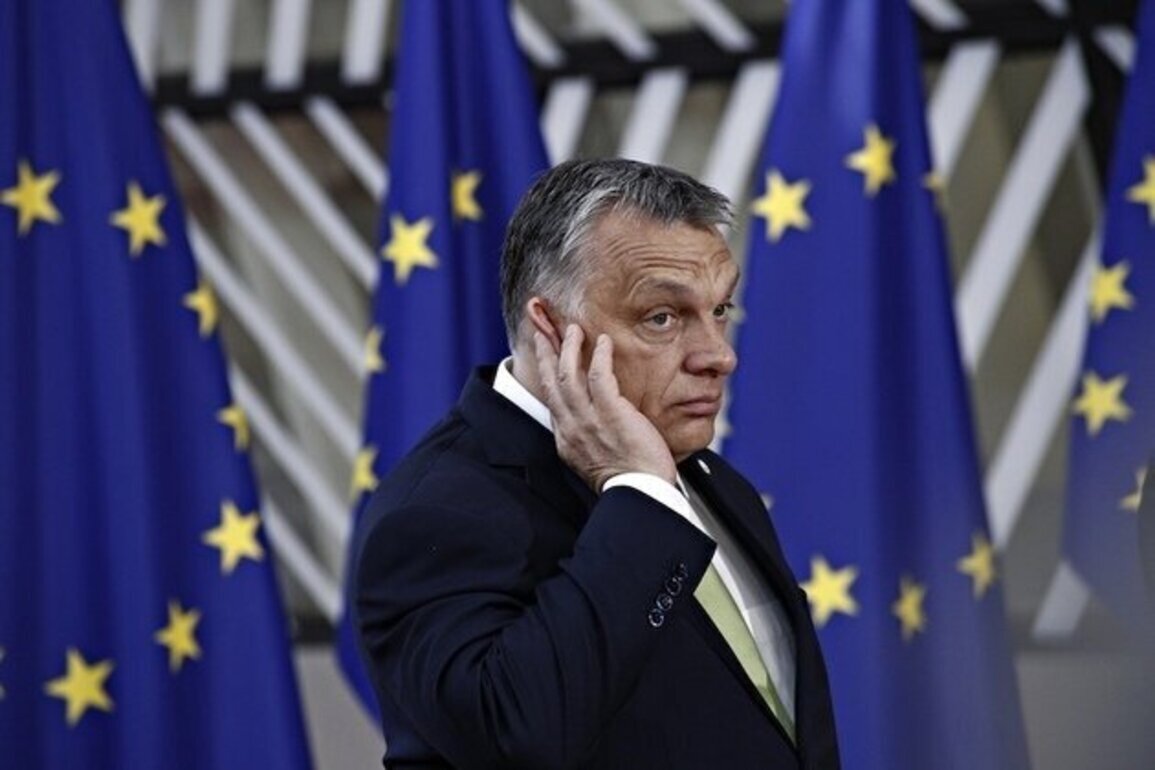
Ale_Mi/DepositphotosViktor Orbns defeat in Hungary has been described asa victory of democracyover illiberal populism. Pter Magyars Tisza party now wields a commanding parliamentary majority, giving it the numbers to pursue constitutional and institutional reform, and to rebuild Hungary as a liberal democracy. It may be tempting to accept this common media framing of the election result. However, it is too early to declare the end of the populist era in Hungary. The notion that Hungary will overnight become a liberal democracy is complicated by Magyar, himself a former member of Orbns Fidesz party,using elements of Orbns populist playbookagainst him. Magyar claimed throughout his election campaign that Orbn was a corrupt politician who had forgotten the interests of the people while he and other Fidesz leadersbuilt extravagant mansions and vacationed on yachts.
However, there is another reason to be cautious about the supposed transformation of Hungary back into a democracy. Indeed, removing Orbn from power is not the same thing as removing his brand of populism from state institutions. Throughout his 16 years as Prime Minister, Orbn sought increasing control over state institutions, including the courts and civil service. Like other European populists, Orbn complained about the rule ofunelected bureaucrats and judges over Hungary.However, after winning a two-thirds parliamentary majority in 2010, his Fidesz governmentrewrote Hungarys constitution, beganreshaping public institutionsby changing cultural and ideological norms, and placed supporters in key positions across the state. Orbn also used state-backed institutions such as theDanube Institute and Mathias Corvinus Collegiumto help turn Budapest into a hub for international nationalist-conservative and post-liberal figures, employing or hosting writers and thinkers such as Rod Dreher, Patrick Deneen, Sohrab Ahmari, and Yoram Hazony.
The purpose of this was not only to entrench Fidesz as Hungarys ruling party, but to turn its state institutions into extensions of the partys populist-nationalist ideology. The result is a state where bureaucracy is not diminished in size or power, but in its independence from government. There is a somewhat surprising aspect to Orbns actions. Populism is usually understood as a politics of elections, leaders, parties, and disillusioned voters. Populists claim to represent real people, and to protect them from corrupt elites, distant bureaucrats, activist judges, biased journalists, and foreign powers. Populism, looked at this way, seems to want to tear down the system and build a direct democracy where leaders respond directly to the peoples needs.
But in Orbns Hungary, we see a case of populism not dismantling but moving into the unelected state, including the bureaucracy, courts, public broadcasters, and other institutions that govern without direct electoral mandate. This raises a question that matters well beyond Hungarys borders. What happens when populists move from attacking unelected institutions to controlling them? Do populists really want to dismantle bureaucracies, as they often promise to do, or do they want to turn them into loyal instruments of populist rule?
The Hungarian case is instructive, and shows us much about how populists go about transforming the unelected state into a tool of populist power. In Hungary, constitutional change provided the framework, but the transformation of the state also proceeded throughpersonnel changes, recentralisation, and the weakening of institutional independence.Civil service reforms made dismissals easier and required employees toshow professional loyaltyto superiors. Decision-making was increasingly concentrated in the prime ministers office and Orbns inner circle.The judiciary was also reshaped, including through early retirement rules that removed hundreds of judges and created vacancies for pro-Fidesz appointees.
This is why Orbns defeat is so significant, but also why it should not be misinterpreted as a simple return of democracy. After all, elections can remove governments faster than they can repair institutions. And a new parliamentary majority can change laws, but it cannot instantly restore professional norms, or rebuild trust in state institutions, or depoliticise institutions that have spent years adapting to populist rule. This problem extends beyond Hungary. Research on populism and public administration shows that populist governments often do not dismantle bureaucracy, but reshape it by centralising authority, politicising appointments, and weakening oversight powers. In a significant study of populisms impact on Italian state institutions, scholars found thatpopulists erode the neutrality and expertise of the civil service.
Nor is populist transformation of bureaucracy a problem endemic to Europe or the West. In India, for example, the Bharatiya Janata Party has not remade the state through the same kind of abrupt constitutional overhaul. Instead, it has relied more on incremental legal change,pressure on accountability institutions, centralisation around the executive, partisan appointments and cultural transformations. This does not necessarily mean that Indias civil service has become less competent in a technical sense. Rather, the concern is that parts of the state have become less politically neutral and more closely aligned with the BJPs Hindu nationalist and populist agenda.
India and Hungary are very different nations. However, in both places, institutions formally designed to constrain power have been pressured into becoming tools of populist governments. This tells us something important about populists in power: that their aim is not necessarily to reduce the significance of the bureaucracy, but to make it more responsive to the leaders political will.
Populists, once in power, may not turn out to be anti-elitists in the simple sense of the term or enemies of bureaucratic bloat. They dislike bureaucrats, judges, and public broadcasters, when these institutions try to constrain them. Once in office, however, they often use the same institutions to discipline opponents, reward allies, control information, demonise minorities, and present their actions as government responding to the will of the people. And it is not always easy to reverse course and re-introduce neutrality into state institutions once the populists are out of power.
This matters not only in countries where populism has recently been defeated, but also in countries where it is growing. Australia is a pertinent example. Pauline Hansons One Nationhas surged in recent polling amid cost-of-living pressures, housing stress, anxiety about immigration, growing distrust of the major parties, and the political fallout from the Bondi Beach terrorist attack. As populist parties continue to grow, liberal democratic governments may be tempted to try to secure state institutions against future populist capture.French president Emmanuel Macron, for example, is already attempting to secure state institutions from an Orbn-style populist takeover. However, although Macrons effort to insulate key French state institutions from a possible National Rally takeover may be intended as a defence of bureaucratic independence, it risks inflaming the very populist sentiment it seeks to contain, and will likely appear to voters as a self-serving attempt to entrench the power of his government after it has left office.
What can we learn, then, from Hungarys experience with populism? Hungary under Fidesz shows us that populism can enter the unelected state, flourish there, and perhaps enjoy its own institutional afterlife even after the fall of an elected populist government. Moreover, it suggests that although populism promises a direct relationship between leader and citizens, a smaller state, and no elite unelected officials getting in the way of the peoples will, it may deliver something less attractive. Indeed, populists in power often deliver a less neutral state, one populated by institutions loyal to the ruling party, leaving behind structures that may outlast the politicians who made them.
Further Reading on E-International Relations
- The Populist Potential of the US and its Fragile Grip on the International System
- European Crises and Right-Wing Populism: The Case of Lega Nord
- The Articulation of Discourse in Populism: Understanding 21st Century Pakistan
- The Rise of Populism: a Threat to Civil Society?
- Brexit, Hong Kong and the Arab Spring: Voices of the People
- National Populism and Anti-Globalism: Conspiracy Theories and the Reactionary International
About The Author(s)
Nicholas Moriesonis a Research Fellow at the Alfred Deakin Institute for Citizenship and Globalisation at Deakin University, Melbourne, Australia. He is the author of numerous journal articles and three books, most recentlyWeaponizing Civilizationalism for Authoritarianism: How Turkey, India, Russia, and China Challenge Liberal Democracy(Palgrave Macmillan, 2025).
TagsElectionsHungaryPopulism